
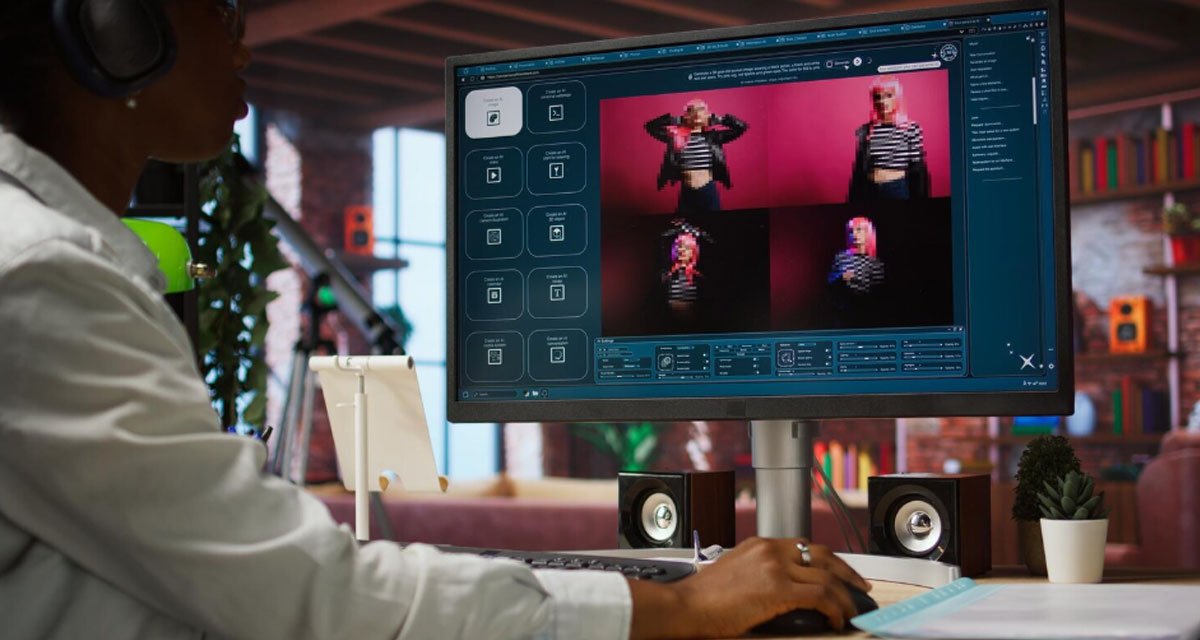
Video editing is undergoing a significant transformation. For years, creators have relied on a largely manual process: importing footage, reviewing clips, selecting useful moments, arranging scenes, refining pacing, adding captions, balancing audio, and revising the timeline.
Those tasks still matter, but artificial intelligence is changing how creators reach the first workable version of a video.
The most important shift is the rise of intent-based editing, where a creator can describe the desired outcome in natural language and allow software to translate that direction into practical actions.
From a Blank Timeline to a Guided Starting Point
A traditional editing session often begins with unorganized clips and very little structure. Before the creative work becomes visible, the editor must sort footage, remove unusable material, identify key moments, and build an initial sequence.
AI-assisted workflows can reduce that early friction. A creator might specify that a video should open with a strong visual, prioritize certain scenes, maintain a measured pace, and stay within a particular duration. The system can then help interpret those instructions and prepare an initial arrangement.
A first cut is not supposed to be perfect. Its purpose is to create something concrete that can be evaluated. Once the structure exists, the editor can judge whether the story is coherent, whether the pacing feels right, and where changes are needed.
What CapCut × Codex Adds to the Workflow
The CapCut × Codex video editor reflects this emerging model. CapCut describes the workflow as allowing users to provide footage and natural-language instructions so the system can help review clips, identify useful moments, remove unwanted sections, arrange footage, and prepare an editable rough cut.
The word “editable” is important. AI assistance is more useful when it produces a starting point rather than a locked result. The creator can still change scene order, alter timing, refine pacing, adjust captions, improve audio, or replace elements that do not support the intended message.
In this sense, AI functions less like an automatic content machine and more like a production assistant. It accelerates the groundwork while leaving creative decisions in human hands.
Why Human Editing Still Defines the Final Result
Video is not simply a sequence of technically correct clips. Meaning often depends on decisions that software cannot fully understand.
A pause in an interview may create emotional weight. A longer establishing shot may help the viewer understand a location. Rapid cuts may energize one video but weaken another. Two editors using the same footage can therefore create very different experiences.
Human review remains essential for checking:
- Narrative flow and scene order;
- Pacing and rhythm;
- Caption accuracy and readability;
- Dialogue, music, and sound balance;
- Visual consistency;
- And whether the tone suits the intended audience.
A More Flexible Workflow for Different Creators
The value of AI-assisted editing changes according to who is using it.
For beginners, natural-language interaction can make editing less intimidating. Someone may understand the story they want to tell without knowing every technical control inside an editing timeline. A guided rough cut provides a structure that can be studied, adjusted, and improved.
Experienced editors gain something different. Repetitive preparation can consume time that would otherwise go toward storytelling, visual polish, sound design, or detailed revisions. When AI helps with early organization, professionals can devote more attention to elements that require taste and experience.
The same principle can benefit teams producing content for several platforms. One recording may need to become a long-form video, a short vertical edit, and several social clips. AI can help organize those variations, but each version still needs review for framing, duration, captions, brand consistency, and audience expectations.
The Bigger Shift Is Creative, Not Just Technical
The most interesting change in AI-assisted editing is not that software can perform more tasks. It is that creators may be able to spend less time on mechanical preparation and more time making meaningful decisions.
When footage can be organized more quickly and instructions can be translated into an editable structure, the editor has greater room to focus on questions that shape the final experience:
What should the audience notice first?
Where should the pace slow down?
Which moment carries the strongest meaning?
The future of video editing is therefore unlikely to be a choice between automation and human skill. The more compelling model is collaboration. AI can help move a project from raw material to a workable structure, while people continue to provide context, restraint, judgment, and creative direction.
The technology may make editing faster, but its greater value lies elsewhere: giving creators more space to make the decisions that turn footage into something worth watching.